“if left unchecked, teasel can form large dense patches and severely impact a habitat planting. teasel can be very difficult to manage because once established it pollutes the soil with durable seed that can germinate throughout the growing season.” (plantscience.psu.edu)
“leaves have spines on the underside of the midvein and smaller spines on bases on the upper leaf surface. the stem leaves are opposite and prickly, especially on the lower side of the leaf midvein.” (nwcb.wa.gov)
“handling teasel is best done with heavy gloves, every part of the plant is prickly to the point of piercing human skin.” (fairegarden.wordpress.com)
“once teasels become established in an area, they are hard to eradicate.” (fllt.org)
“if left unchecked, teasel quickly can form large monocultures excluding all native vegetation.” (illinois.edu)
if left unchecked…
it would seem these teasel beg the metaphoric reference to people within communities. it is no wonder – in these times – that my mind immediately goes there.
but teasels are beautiful, with interesting texture. like the flat-back-hand-carder for the vintage spinning wheel in our basement that cards wool or raises the nap on fabric, they were utilized for decades and were initially cultivated from the old world. they appear in planted gardens for their dominant sculptural presence and in meadows, growing wild and free.
on a quest – every day – to take photographs, i find myself back at 18. i was given my first 35mm camera when i graduated from high school early, my parents pretty certain i would love it. i did. i was out the next day, walking the beach in winter, reveling in capturing it all. i took that camera everywhere and took pictures of everything, reveling in the freedom of aperture and shutter speed. the deliberate taking of photographs brings one to center, into presence – there is no need for speed. instead, it is about slow movement, about noticing, about paying attention.
and i am – lately – feeling a tad bit back-there. at 18. the tiny lone flower, the shadow, the curl of bark – they get my attention. i pause.
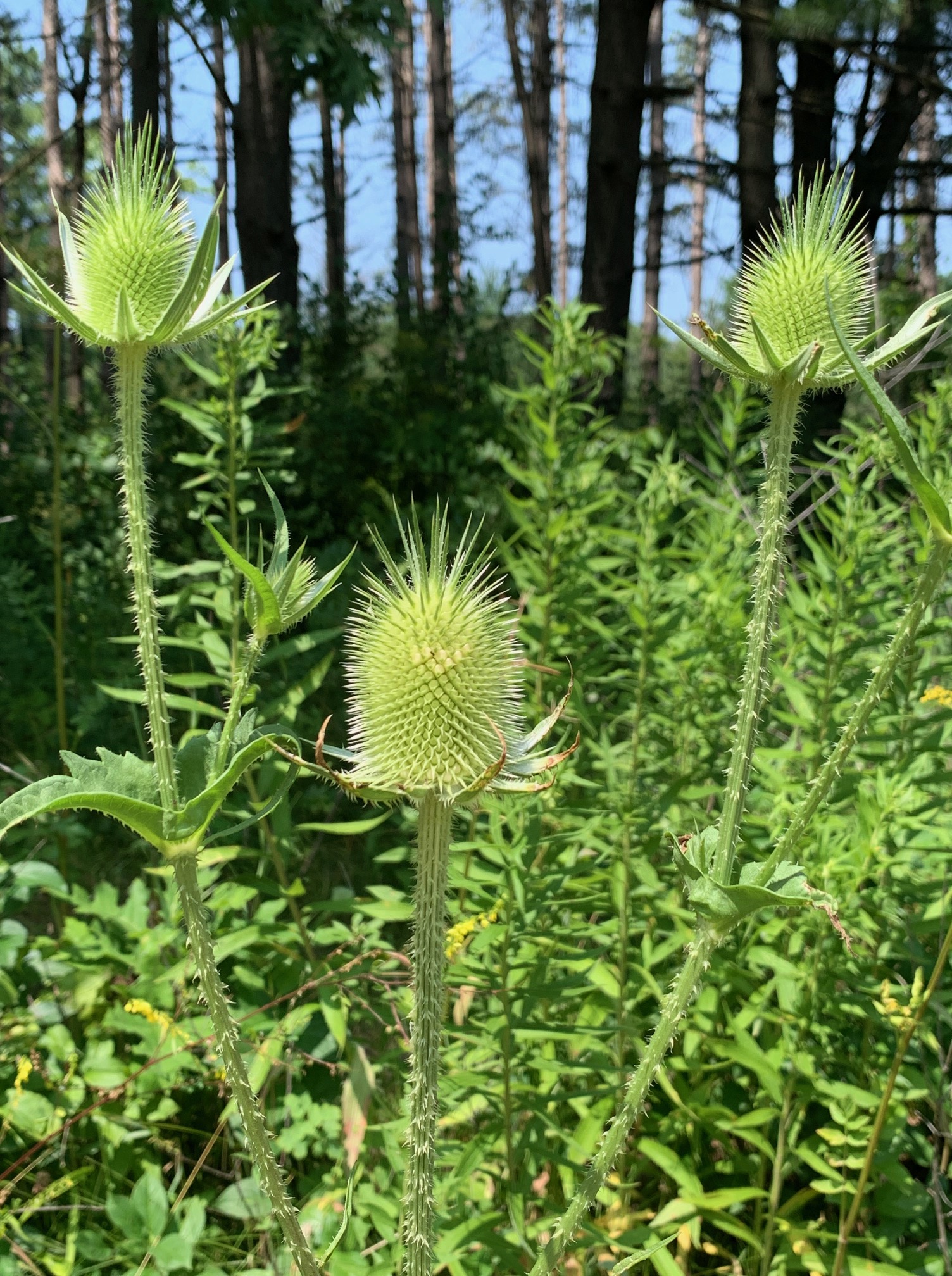
these teasel stopped me. there was a teasing tension between their color, their thorns, the sky, the pine trees in the background. the juxtaposition of the bristle and the luminous. beautiful. i, too, couldn’t resist the teasel.
“despite its noxiousness, it’s impossible not to find the teasel rather endearing…” (jacqueline stuhmiller, fllt.org)
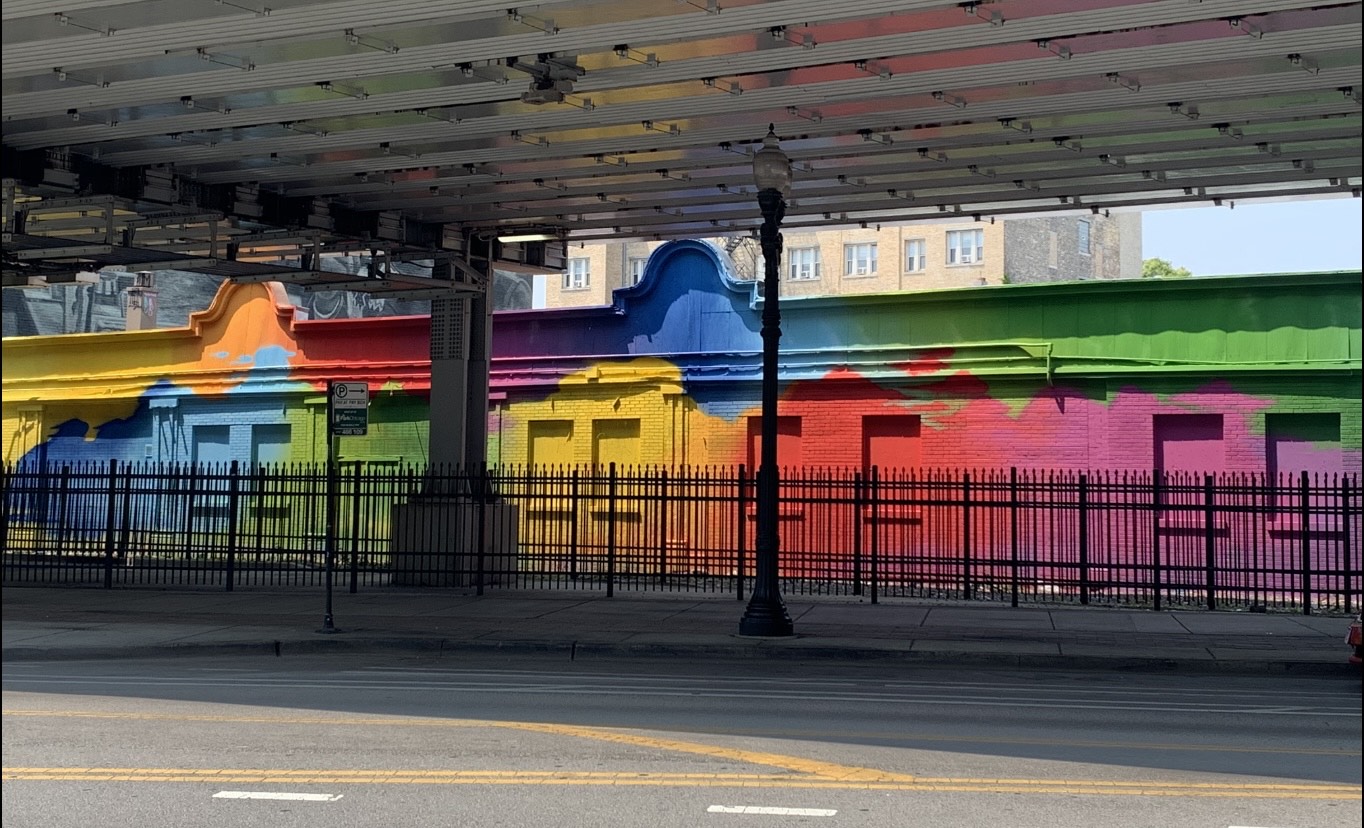
to be there is not to be in a nod-to-diversity. instead, the city embraces diversity. it is true to its intention. the rainbow flags and “proud” banners and painted buildings are emblems of this good intention.
but one must be wary of emblems, of symbols, of misspoken intents. to live in today’s world is to bring a bit of doubt to the table, to ask questions, to do your homework, to be informed. for not every mission statement will stand up to scrutiny, not every symbol of goodness will survive real review. it is surprising – at best – to realize that agenda has superseded goodness and has taken your trust for a ride. beware of generalizing virtue simply because it falls under the umbrella of a symbol.
i have been immersed in places in which i placed all my faith, sans skepticism or dubiety. i have been in communities that touted their transparency, their compassion, their participation in good mission. all the while, the flags of opacity, of hidden agenda, of untruths spoken and truths unspoken, flew quietly and deliberately in, usurping any good intention that remained, driving out the hard work of community-building, of the joy of the embrace. out of alignment, were the symbols capable, the symbols would shudder.
and so, i walk into the thick of the city, sensors on. i know there are issues, problems, but i know there is attempt to address these, to ask hard questions, to communicate, to resolve any perceived conflict.
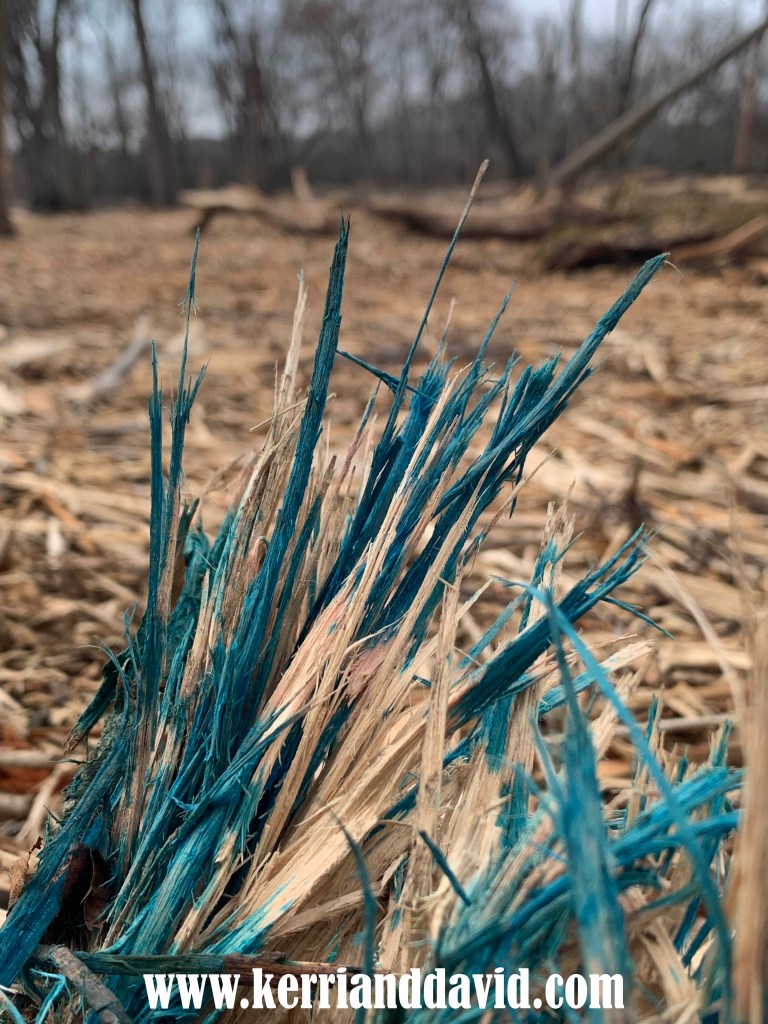
it looks like the hubbabubba fairy flew through, magic wand in hand, touching stumps and shredded trees everywhere. it is striking to see and not just a little disturbing. there is blue-fairy-dust-smattering all over the woods. trees have been felled, underbrush torn up, everything ground into rough-hewn mulch. one shade of blue and many shades of brown.
only it’s not magic dust and no hubbabubba-bubble-gum or jolly-rancher-blue-raspberry fairy has been there. instead, it’s an herbicide and part of treatment for the invasive species eradication project on our trail. it’s completely and understandably important, but it sure doesn’t look very nice. right now, it looks a tad bit decimated, but good strong organic matter remains and will grow and rejuvenate, despite the eradication of so many toxic invasives.
we need be cautious. often the invasive stands in the forest, all tall and righteous, and we are convinced that they are a beautiful partner in the woods community. or the invasive is short and squat, pudgy bushes that look lush and, again, we are convinced they are contributing members of this symbiotic woods. careful discernment is necessary, for we can be easily fooled, particularly by those invasives that look mighty or seem healthy. and these mistaken identities can – as we have learned – lead to the detriment of the very lovely and thriving woods.
that’s the thing about invasive species, i guess. you don’t recognize them as invasive. you trust – as you look around – that they are supposed to be there – for the good of the woods or the preserve or the wetland or the lake. here, in this woods, they appear to be a part of it – ever-present, growing and greening up in the spring. according to the national park service, “invasive species—nonnative organisms that cause harm to the environment, economy, or human health—have serious impacts on native ecosystems. they disrupt ecological processes, threaten ecosystem integrity, degrade cultural resources…”. they are not what they appear.
i suppose there are institutions like that as well. invasives choking out the real life, the real growth, the organic nature of the organization – all bent on preserving their own agendas, maintaining control, practicing a generalist survival strategy honed through the years. bobcats and coyotes are generalists and, i must say, i know a few.
the national wildlife federation states, “detecting new invaders quickly, and responding rapidly to eliminate them, is essential to limiting impacts and costs when prevention fails.”“many invasive species thrive because they outcompete native species for food.” i suppose it would be wise to be wary of being outcompeted.
“many invasive species destroy habitat” and “some invasive species do great harm to the economy,” national geographic warns and then adds, “invasive species are almost always spread by human activity.”
“you can treat and dispose of invasive non-native plants by: spraying with chemicals, pulling or digging out live, dead or dying plants, cutting back plants to prevent the seeds dispersing.” (gov.uk)
yes. these are some of the efforts we are seeing in our own treasured woods: the removal of the toxic longstandings – masked as steadfasts participating in the mission of the forest – for the true benefit of that forest and wildlife community.
“once invasive species become established and spread, it can be extraordinarily difficult and costly to control or eradicate them.” (national wildlife federation)
in that light and with great intention, in one dedication to such efforts, “the national wildlife federation leads the charge to prevent invasive carp from entering and decimating the great lakes.” the national park service explains, “invasive carp cause serious damage to the native fish populations in the lakes and rivers that they infest because they out-compete other fish.”http://www.invasivecarp.us asks fishermen who catch a carp to “immediately contact the appropriate agency personnel for the state you are in.” we are urged to be ever mindful, to be transparent about what we see, about that which is destructive.
yes. watch out for those carp and all the other invasives. the hubbabubba fairy has left the building.







 reverse threading