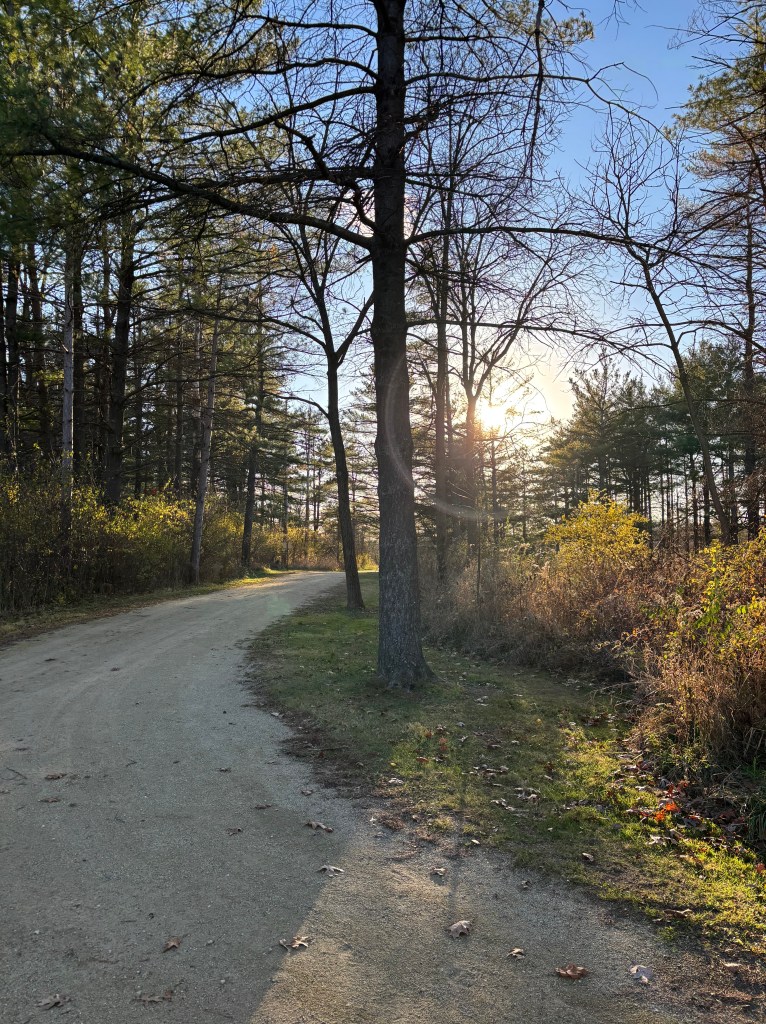
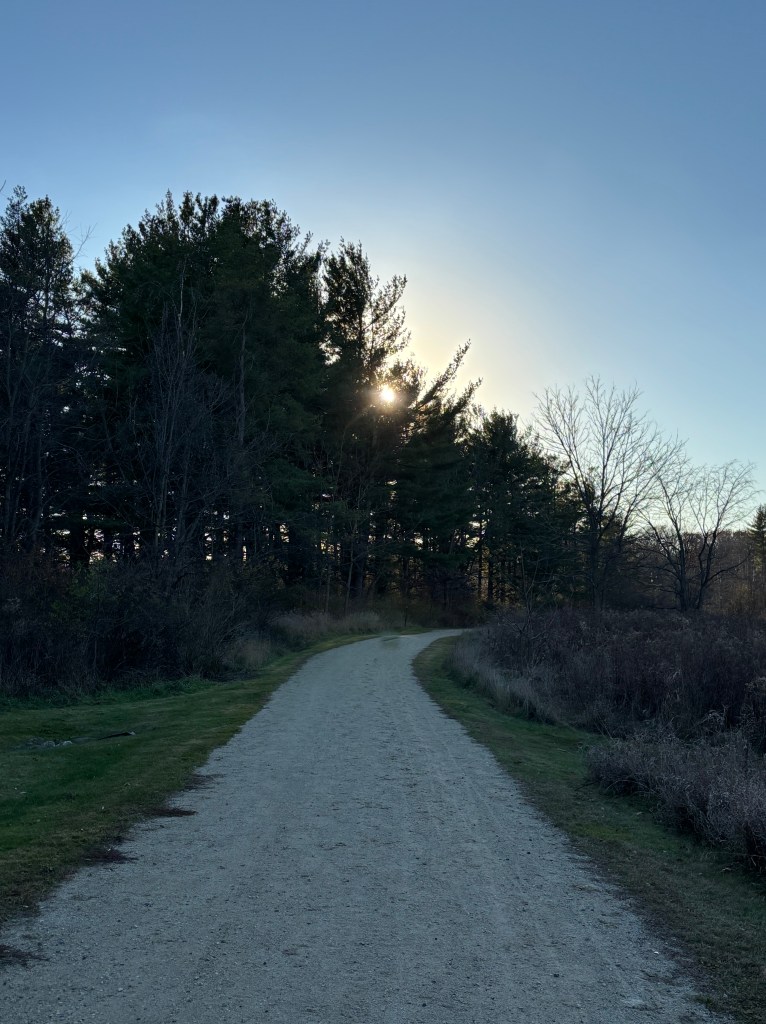
we know its curves well. if they could whisper, they would share the secrets of our conversations – conversations of the last decade – times calm, times fraught.
if the curves could speak, the dirt we have kicked up with our boots would sputter and cough, spilling how many painful moments there have been on this trail, how many times one of us has wept.
if the curves could speak, the underbrush just to the side of what is worn down would rise and wave verdant leaves, singing about our triumphs or the laughter that has ridden the wind just above us.
if the curves could speak, they would talk of the ping-ponging of decisionmaking, decisions discussed, decisions debated, decisions made – all on this trail.
if the curves could speak, they would mournfully tell of regrets, of disappointments, of trauma.
if the curves could speak, they would opine on our opining…of health, of politics, of purpose, of relationship, of faith.
if the curves could speak, they would – with glee – share the tiny goodnesses they had overheard, the learnings they had witnessed, the big abundances they had eavesdropped.
if the curves could speak, they would brush the air with words that describe something fluid, something everchanging, something they have helped to not be rigid.
if the curves could speak, they would wordbubble with every shape and form of love, spoken and shouted, sung and murmured.
if the curves could speak, they would give up our secrets – every last one of them.
but the curves cannot speak. and they hold close our hushed voices, our loud voices, our confusion, our tears, our anger, our laughter.
they could not know how much knowing them has aided us, comforted us, pushed us, reassured us.
and i suppose we could not know how well they know us.
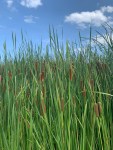
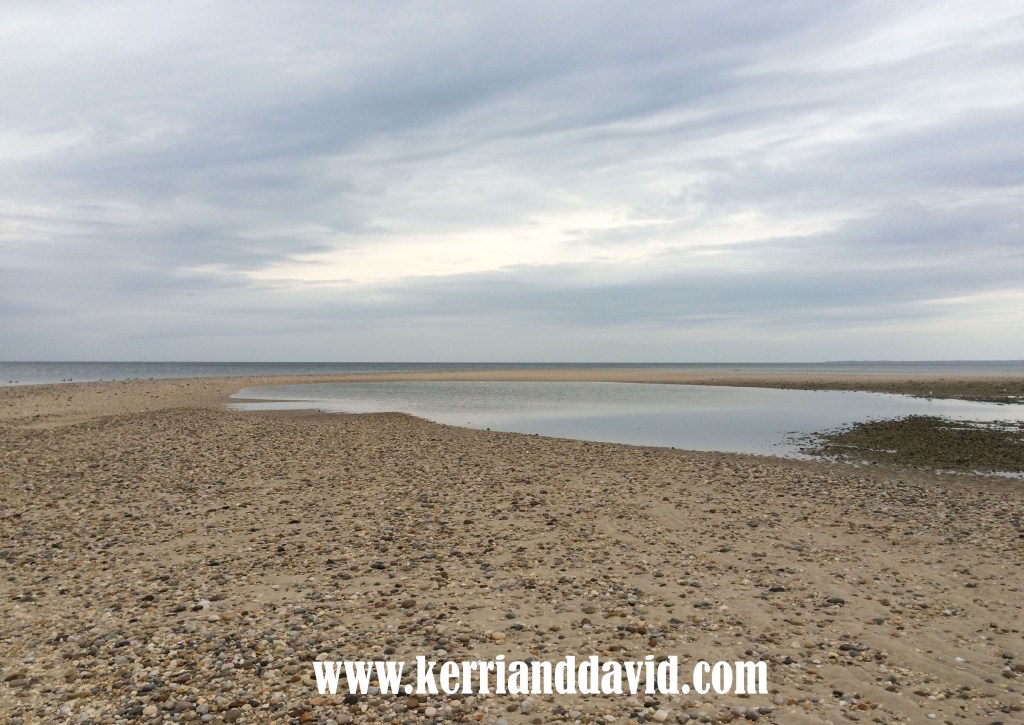
i grew up on long island – which is, quite obviously by definition, surrounded by water. i spent the vast majority of my time outside at the beach. winter, spring, summer and fall. pebbly beaches along the sound, sandy dunes along the ocean, beach grasses and willowy reeds dominate the vegetation and, so, seeing cattails is like seeing home.
the next time we go there i’ll spend a good bit of time at those beaches. it will be time to reclaim them, to reclaim that place.
it is no surprise to learn that these plants that pull at my heart – cattails – are resilient and adaptable, persistent and resourceful, able to flourish in all kinds of circumstances and under adverse conditions.
spiritually, they symbolize peace and tranquility – the very things i always felt at those beaches back in the day, the same thing i feel as we hike through portions of our trail where we are dwarfed by the cattails surrounding us.
i slow down in those sections, soaking up the denseness of these stands on both sides of the trail. seagulls and red-winged blackbirds elicit the same when i spot them – they zip around and i stand – transported back in time to the marshland on my way to crab meadow or the dunes surrounded by sand fencing on fire island. i stand in memory. no wonder i love this trail.
we arrive back home after hiking – a tiny bit sunburned, our legs tired. the grasses and daylilies in the front yard greet us as we pull in. they are robust and their greeting is in chorus. and i realize that these, too, are the plants of the island. these grasses, these daylilies, spilling-over hydrangea, the ferns in the back, the hosta, sweet lavender…they are the plantings of the waterfront; they are familiar.
we surround ourselves purposefully – and sometimes unintentionally – with things that help us, things that feel good, things that ground us. we sink roots deep and move in the wind like the reeds in marshes, like cattails in a summer storm. we are resilient and flexible, making do with workarounds and chutzpah. we survive and have unlimited ability to thrive.
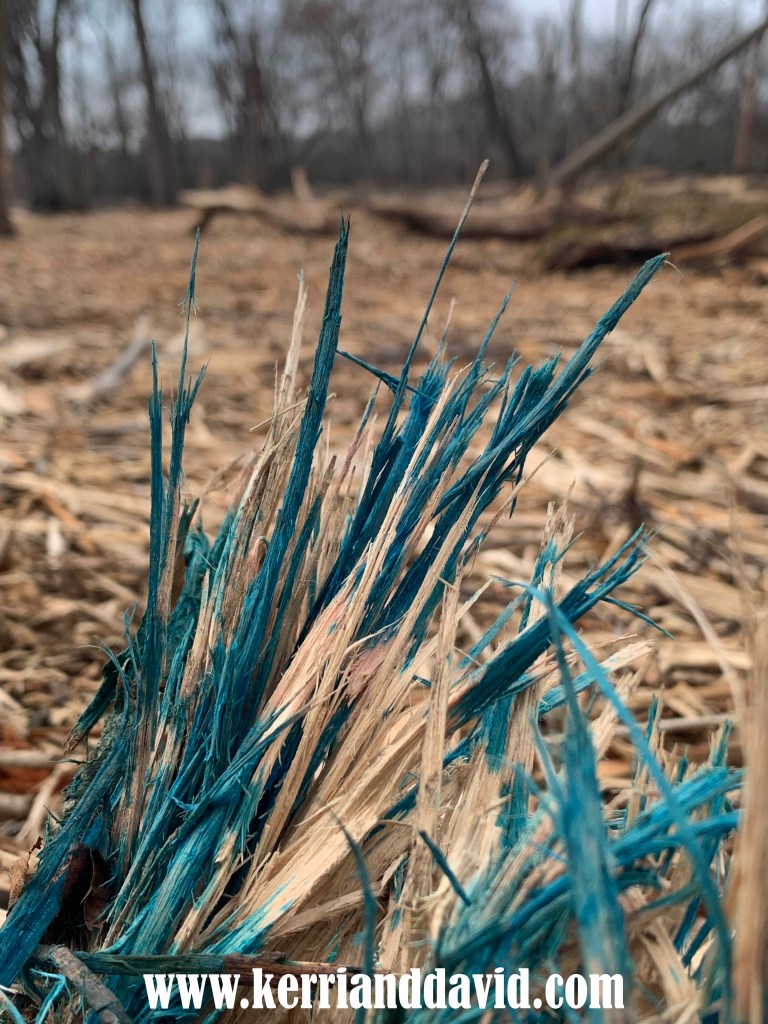
it looks like the hubbabubba fairy flew through, magic wand in hand, touching stumps and shredded trees everywhere. it is striking to see and not just a little disturbing. there is blue-fairy-dust-smattering all over the woods. trees have been felled, underbrush torn up, everything ground into rough-hewn mulch. one shade of blue and many shades of brown.
only it’s not magic dust and no hubbabubba-bubble-gum or jolly-rancher-blue-raspberry fairy has been there. instead, it’s an herbicide and part of treatment for the invasive species eradication project on our trail. it’s completely and understandably important, but it sure doesn’t look very nice. right now, it looks a tad bit decimated, but good strong organic matter remains and will grow and rejuvenate, despite the eradication of so many toxic invasives.
we need be cautious. often the invasive stands in the forest, all tall and righteous, and we are convinced that they are a beautiful partner in the woods community. or the invasive is short and squat, pudgy bushes that look lush and, again, we are convinced they are contributing members of this symbiotic woods. careful discernment is necessary, for we can be easily fooled, particularly by those invasives that look mighty or seem healthy. and these mistaken identities can – as we have learned – lead to the detriment of the very lovely and thriving woods.
that’s the thing about invasive species, i guess. you don’t recognize them as invasive. you trust – as you look around – that they are supposed to be there – for the good of the woods or the preserve or the wetland or the lake. here, in this woods, they appear to be a part of it – ever-present, growing and greening up in the spring. according to the national park service, “invasive species—nonnative organisms that cause harm to the environment, economy, or human health—have serious impacts on native ecosystems. they disrupt ecological processes, threaten ecosystem integrity, degrade cultural resources…”. they are not what they appear.
i suppose there are institutions like that as well. invasives choking out the real life, the real growth, the organic nature of the organization – all bent on preserving their own agendas, maintaining control, practicing a generalist survival strategy honed through the years. bobcats and coyotes are generalists and, i must say, i know a few.
the national wildlife federation states, “detecting new invaders quickly, and responding rapidly to eliminate them, is essential to limiting impacts and costs when prevention fails.”“many invasive species thrive because they outcompete native species for food.” i suppose it would be wise to be wary of being outcompeted.
“many invasive species destroy habitat” and “some invasive species do great harm to the economy,” national geographic warns and then adds, “invasive species are almost always spread by human activity.”
“you can treat and dispose of invasive non-native plants by: spraying with chemicals, pulling or digging out live, dead or dying plants, cutting back plants to prevent the seeds dispersing.” (gov.uk)
yes. these are some of the efforts we are seeing in our own treasured woods: the removal of the toxic longstandings – masked as steadfasts participating in the mission of the forest – for the true benefit of that forest and wildlife community.
“once invasive species become established and spread, it can be extraordinarily difficult and costly to control or eradicate them.” (national wildlife federation)
in that light and with great intention, in one dedication to such efforts, “the national wildlife federation leads the charge to prevent invasive carp from entering and decimating the great lakes.” the national park service explains, “invasive carp cause serious damage to the native fish populations in the lakes and rivers that they infest because they out-compete other fish.”http://www.invasivecarp.us asks fishermen who catch a carp to “immediately contact the appropriate agency personnel for the state you are in.” we are urged to be ever mindful, to be transparent about what we see, about that which is destructive.
yes. watch out for those carp and all the other invasives. the hubbabubba fairy has left the building.
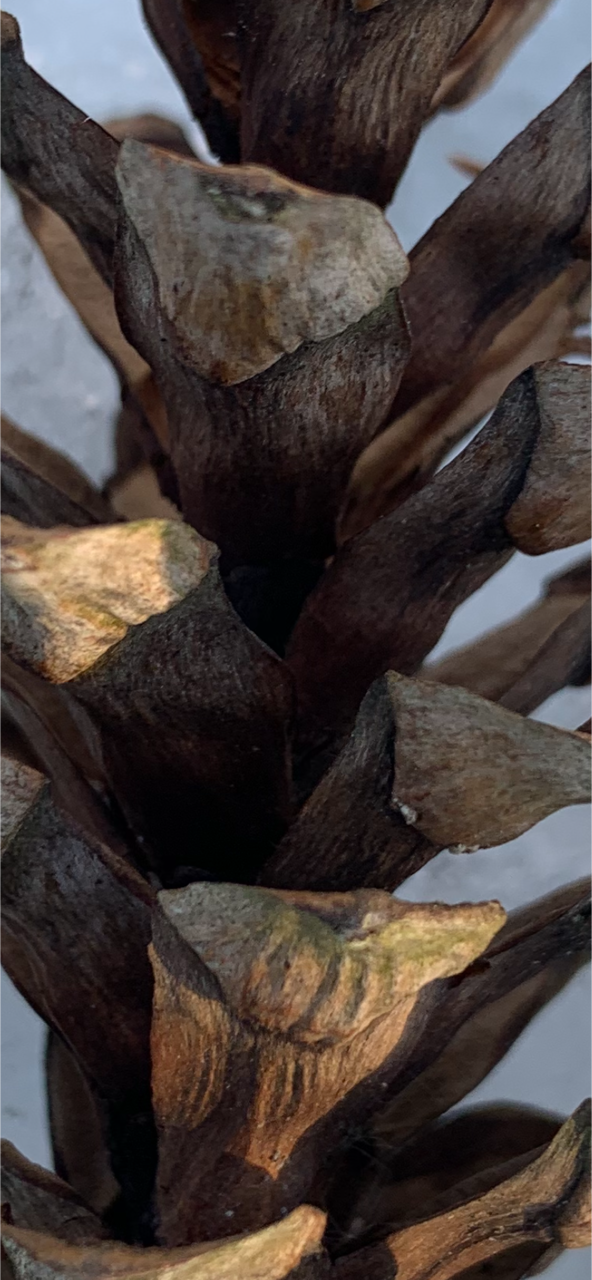
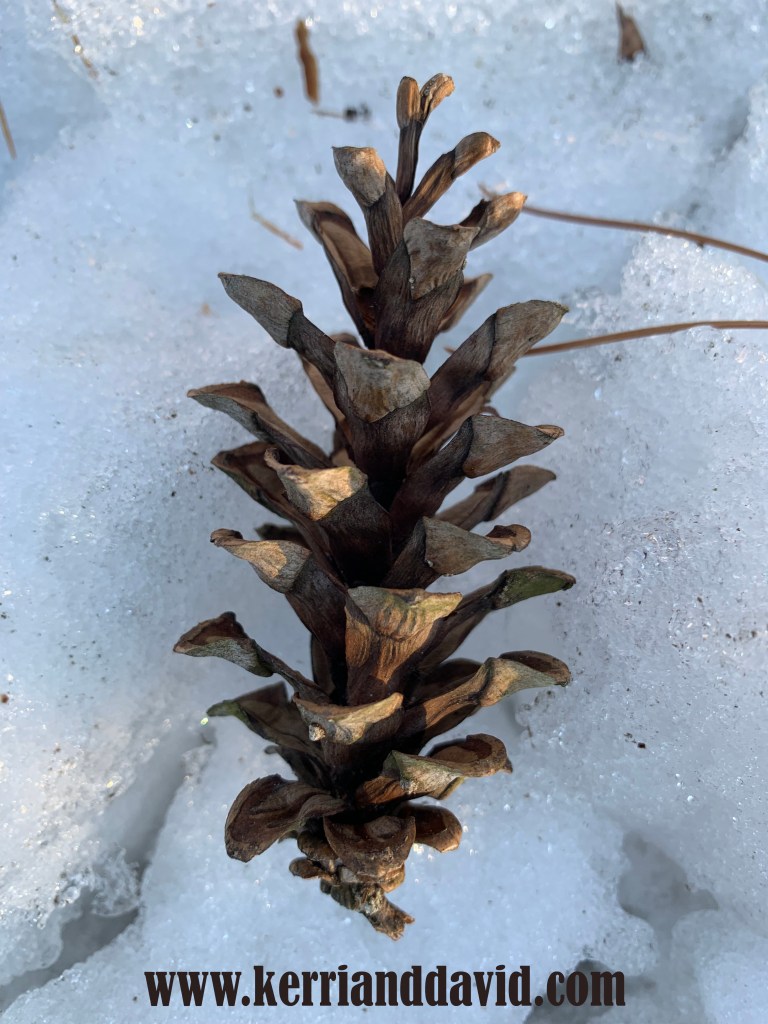
it lay in the snow, the last of the sun’s rays dancing across it. it was merely a single pinecone. but the sun drew me to it and the way the light played on it called attention to the texture. up close and personal, it is a painting.
reading reveals that pinecones are the safe place for the seeds of the tree, that pinecones can remain on a tree for even ten years, that pine cones open and close depending upon moisture. more complex than you might think.
though ever-important for the proliferation of pine trees, pinecones are one of those things we pass by, often not noticing. what else are we missing – passing by the ordinary, not stopping to really look.
because we know our favorite trail well, we see the tiny shifts, the changes, the transformation. we watch the light play on the cattails and marsh grasses and catch the shadows as they fall. if one note in the woods is different, one tint of color, we draw up, stop. there are days we are stopping often, capturing the transitions, watchful.
we don’t buy a lot of new things. we are sorely behind the fashion curve – i suspect our target jeans are a few years behind-the-times. instead, we accumulate these moments of noticing. our breath is not connected to the facets of diamonds, but rather to the way underbrush berries stand out against the snow. we don’t reach for the keys of a porsche; we reach for our backpack to take on the trail. we do not watch a larger-than-life screen tv; our big-screen of choice is outside.
we look for the paintings in the snow, in the sky, in the stand of trees. we listen for the song of the breeze, of wildlife sharing space with us. the wind stings our cheeks and makes the tips of our fingers burn. we are grateful for the quiet and this path through the forest, across the marsh, along the river.
we immerse in the 3D canvas nature is providing us. no virtual reality needed.
the height of mosquitoes. the height. and the height. both definitions.
ankles, necks…it matters not. right now our favorite river trail hike is swarming with them. if i thought that mosquitoes had any good will toward others, if i thought that mosquitoes served a truly individualized and specialized useful purpose, if i thought that this being – a tiny species that causes infection to millions of humans – was not evil itself, well, i would be deluding myself.
they are dreadful.
this trail now – dressed in all shades of lush green – is only accessible to the deet-doused, unless you are one of those people who are immune to their snide little biting proboscis. and, in other news, there is no limit to how many times one mosquito can bite you – it bites until it is full. just yuck.
we missed our trail so we went earlier in the day. it was to no avail. there they were, laying in wait. long trails of mosquitoes following us and our carbon dioxide trails as we sprinted through the woods, thinking, foolishly, that we were evading them.
they do not amuse me. they ruin everything. i do not like mosquitoes. at all. not that you haven’t noticed.
i read, “mosquitoes hate the smell of lavender, citronella, clove, peppermint, basil, cedarwood, eucalyptus, peppermint, lemongrass and rosemary.” (homesandgardens.com)
i am looking for a new perfume or, perhaps, moving to iceland, which is reportedly mosquito-free.




 reverse threading